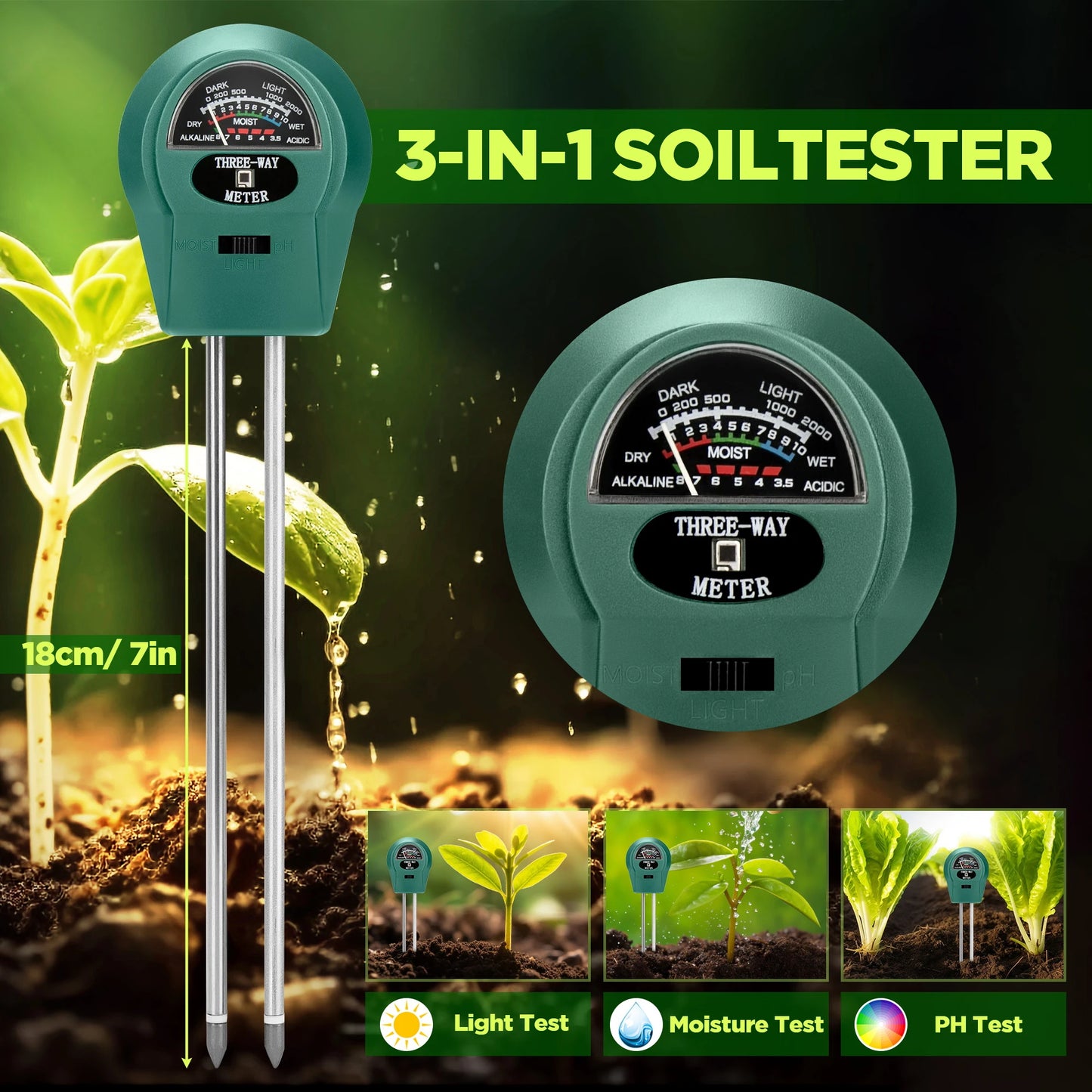
3-in-1 Soil Meter for pH, Moisture & Light | For Plants & Garden
3-in-1 Soil Meter for pH, Moisture & Light | For Plants & Garden
Couldn't load pickup availability


 Satisfied customer guarantee
- Easy returns
 Free and trackable shipping
Give your plants better conditions to thrive with this practical 3-in-1 soil meter. It helps you quickly check the soil's pH value, moisture, and light level, making it easier to adjust watering, placement, and soil type to your plant's needs.
Perfect for those who grow potted plants, flowers, vegetables, herbs, or garden plants and want to avoid common problems such as overwatering, incorrect soil balance, or too little light.
The meter is easy to use and requires no batteries. Simply insert the probe into moist soil, wait for the value to stabilize, and read the result directly.
Benefits
Measures pH, moisture, and light in one tool
Helps you avoid overwatering and underwatering
Provides better control over the soil's acidity
Shows if the plant is getting enough light
Easy to use
Requires no batteries
Suitable for indoor and outdoor plants
A simple tool for healthier plants, better cultivation, and proper care.
3-in-1 function: measures soil pH, moisture, and light level
Easy reading: clear values for quick checks
For plants and cultivation: suitable for flowers, potted plants, herbs, and gardens
No power needed: used without batteries
Compact size: easy to use and store
Specifications
pH range:
* 3.5–8 pH
* 3.5–7 = acidic
* 7–8 = alkaline
Moisture range: 1–10
-
-
1–3 = dry
-
3–7 = normal
-
7–10 = wet
-
Light measurement: 0–2000 LUX
-
-
0–200 = low
-
200–500 = low+
-
500–1000 = normal
-
1000–2000 = high
-
Probe length: 180 mm
Product dimensions: 255 × 62 × 36 mm
Net weight: 58 g
How to use the soil meter
-
Clear away leaves, roots, and other organic debris from the soil surface.
-
Clean the probe tip with a cloth.
-
Lightly moisten the soil with water before measuring.
-
Insert the probe into the soil to about two-thirds of its length or more than 10 cm.
-
Ensure the probe is at root zone level.
-
Wait for the value to stabilize and read the result.
-
Measure in several places in the soil and calculate an average for a more accurate result.